Shoot And Drive

Shoot And Drive

Description:

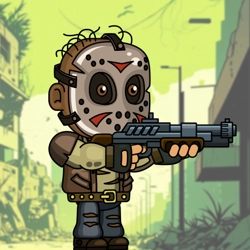
In a world where radiation is becoming increasingly prevalent, the desperation and madness gripping humanity are palpable. Cyberspace has become a battlefield, as life continues in this fight against nuclear fallout. A fight that is often mirrored in the strategic game of online solitaire.

This stark reality of post-apocalyptic survival is paralleled in online solitaire. Like a player caught in the midst of a network of deceivingly simple yet challenging cards, you are thrust into a world of chaos with your comrades. You've been ensnared in the deadly web of online adversaries, bandits in the virtual world who seek nothing more than your fall.

The game of online solitaire has suddenly taken on a stark resemblance to your real-life circumstance. You're trapped in a quagmire, where every decision can mean the difference between life and death. Just like in online solitaire, you’ve got to strategize and plan your moves carefully, because a single misstep can lead to your doom.

Your only comrades in this harsh landscape are a rusty gun and a car that’s teetering on the brink of dysfunction. They stand as your best chance for survival against the ruthless bandits waiting to pounce. These 'friends' are akin to the limited tools you have at your disposal while playing online solitaire.

In the midst of all the chaos, online solitaire offers a contrastive solace. The game symbolizes the stark realities you’re facing but also provides an escape. It’s like a virtual sanctuary, a place where you can unwind and sharpen your tactical acumen, which is crucial in the real world's fight for survival.

In online solitaire, quick thinking and strategic planning are rewarded. In a post-apocalyptic world, these skills could very well mean the difference between life and death. So while the radiation spreads and the world grows increasingly chaotic, take shelter in the strategic haven of online solitaire. It’s an analogy of your life—a test of strategy, survival, and ultimately, perseverance.

In the thick of the battle, online solitaire stands as a beacon of hope. It’s the training field for the champions of the post-apocalyptic world, where radiation might have altered the rules of life, but the will to survive still stands strong. The best course of action and fight is understanding your resources and planning strategically, just like each move in a game of online solitaire.

Instructions:

WASD = move / drive a vehicle F - Enter/Exit Left-click = shoot Right-click = iron sight Mouse wheel / 1-6 = change weapons Left-shift = run C = crouch
What are Browser Games

A browser game or a "flash game" is a video game that is played via the internet using a web browser. They are mostly free-to-play and can be single-player or multiplayer.

Some browser games are also available as mobile apps, PC games, or on consoles. For users, the advantage of the browser version is not having to install the game; the browser automatically downloads the necessary content from the game's website. However, the browser version may have fewer features or inferior graphics compared to the others, which are usually native apps.

The front end of a browser game is what runs in the user's browser. It is implemented with the standard web technologies of HTML, CSS, JavaScript, and WebAssembly. In addition, WebGL enables more sophisticated graphics. On the back end, numerous server technologies can be used.

In the past, many games were created with Adobe Flash, but they can no longer be played in the major browsers, such as Google Chrome, Safari, and Firefox due to Adobe Flash being shut down on December 31, 2020. Thousands of these games have been preserved by the Flashpoint project.

When the Internet first became widely available and initial web browsers with basic HTML support were released, the earliest browser games were similar to text-based Multi-User Dungeons (MUDs), minimizing interactions to what implemented through simple browser controls but supporting online interactions with other players through a basic client–server model.[6] One of the first known examples of a browser game was Earth 2025, first released in 1995. It featured only text but allowed players to interact and form alliances with other players of the game.