Description:
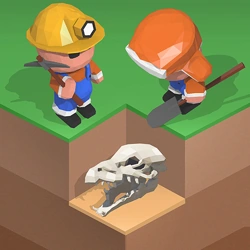
For those that love gaming and have a certain fascination with history, particularly the era of the dinosaurs, you will definitely appreciate the excitement of online coop games that venture into the realm of archaeology. Among these is an outstanding archaeological excavation simulator that allows you to literally dig into the past in a fun and exciting way while interacting with friends.Online coop games, such as this archaeological excavation simulator, offer an experience like no other. The game lets you step into the shoes of a professional archaeologist, becoming the head of major archaeological excavations. If you've ever wanted to lead a team of experts in unearthing the secrets buried deep beneath the earth's surface, this is your chance to make those dreams come true, all from the comfort of your home and with the added value of cooperative play.
One of the main goals within the game is to meticulously go through layers of virtual earth and rock, hunting for the ancient remnants of a bygone era. In this case, fossils are your treasure, dinosaur bones the ultimate find. Collecting from the bones of a dinosaur can be quite challenging but equally rewarding. Earning this achievement requires patience, persistence, and strategy. The game offers an opportunity to learn about the painstakingly meticulous process of archaeology, albeit in an engaging and fun way.
Online coop games, such as this, provide a platform for players to challenge each other, share their find, and even collaborate on significant excavations. Rather than facing the challenges of archaeology alone, you get to work together with friends or other players globally, each contributing their unique skills to the task at hand. Collecting from a dinosaur's bones becomes not just an individual achievement, but a team accomplishment.
In the world of online coop games, this archaeology excavation simulator stands out for its intriguing premise. As the leader of a team unearthing history's secrets bit by bit, you learn to appreciate the efforts and dedication that goes into archaeological excavations in real life. This is not just a roar of a dinosaur echoing from the past; this is intimately connecting that roar with the complex process that brings it to life in our present imagination or understanding. It's about learning, fun, and cooperation, making it a must-try for all game and history enthusiasts.
Instructions:
Manage the process, hire workers, blow up! Collect bones of ancient animals! Plunge into the world of science and history! Dig up interesting antiquities, bones and collect your museum exhibits!What are Browser Games
A browser game or a "flash game" is a video game that is played via the internet using a web browser. They are mostly free-to-play and can be single-player or multiplayer.
Some browser games are also available as mobile apps, PC games, or on consoles. For users, the advantage of the browser version is not having to install the game; the browser automatically downloads the necessary content from the game's website. However, the browser version may have fewer features or inferior graphics compared to the others, which are usually native apps.
The front end of a browser game is what runs in the user's browser. It is implemented with the standard web technologies of HTML, CSS, JavaScript, and WebAssembly. In addition, WebGL enables more sophisticated graphics. On the back end, numerous server technologies can be used.
In the past, many games were created with Adobe Flash, but they can no longer be played in the major browsers, such as Google Chrome, Safari, and Firefox due to Adobe Flash being shut down on December 31, 2020. Thousands of these games have been preserved by the Flashpoint project.
When the Internet first became widely available and initial web browsers with basic HTML support were released, the earliest browser games were similar to text-based Multi-User Dungeons (MUDs), minimizing interactions to what implemented through simple browser controls but supporting online interactions with other players through a basic client–server model.[6] One of the first known examples of a browser game was Earth 2025, first released in 1995. It featured only text but allowed players to interact and form alliances with other players of the game.